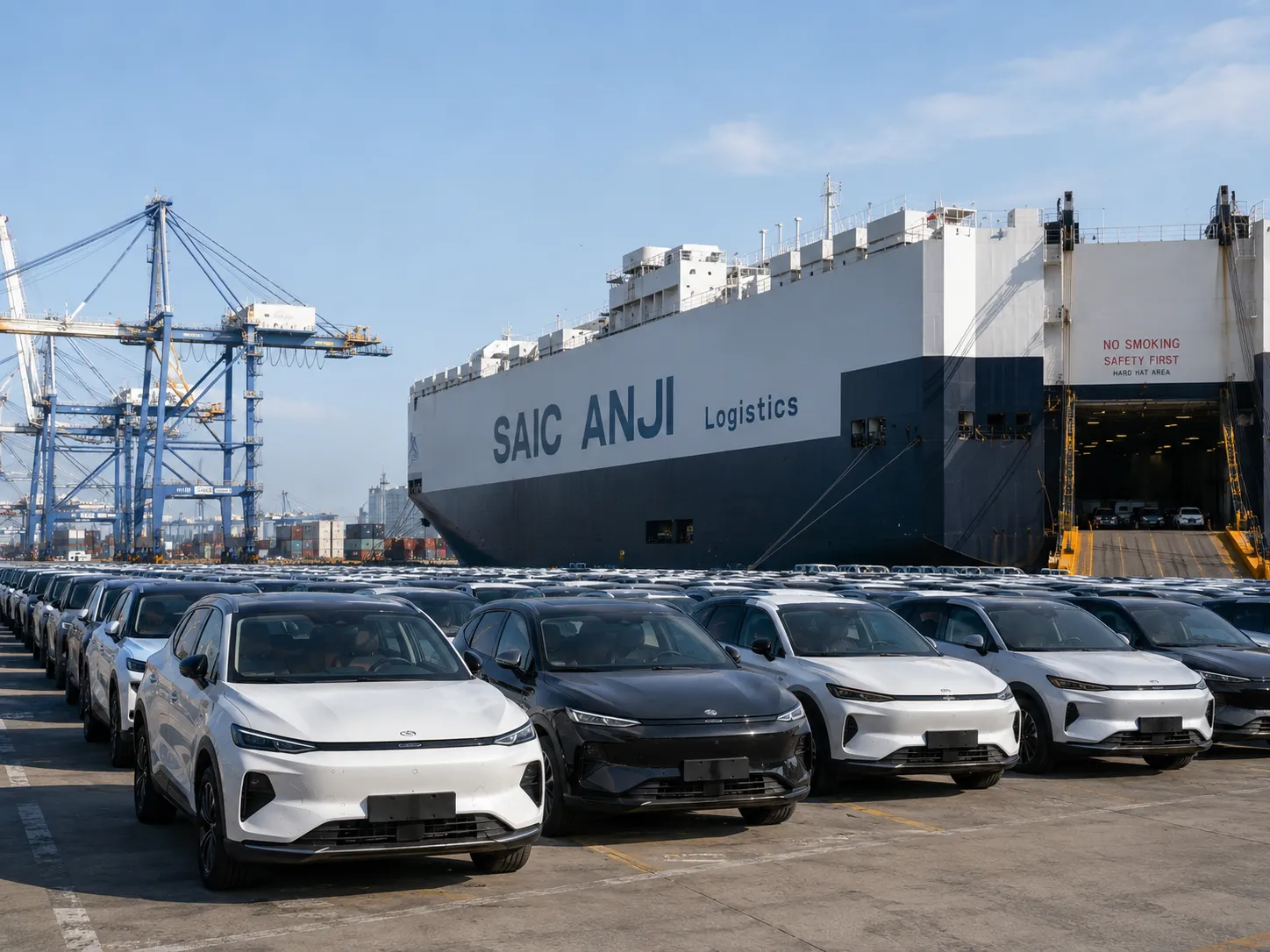
Summary
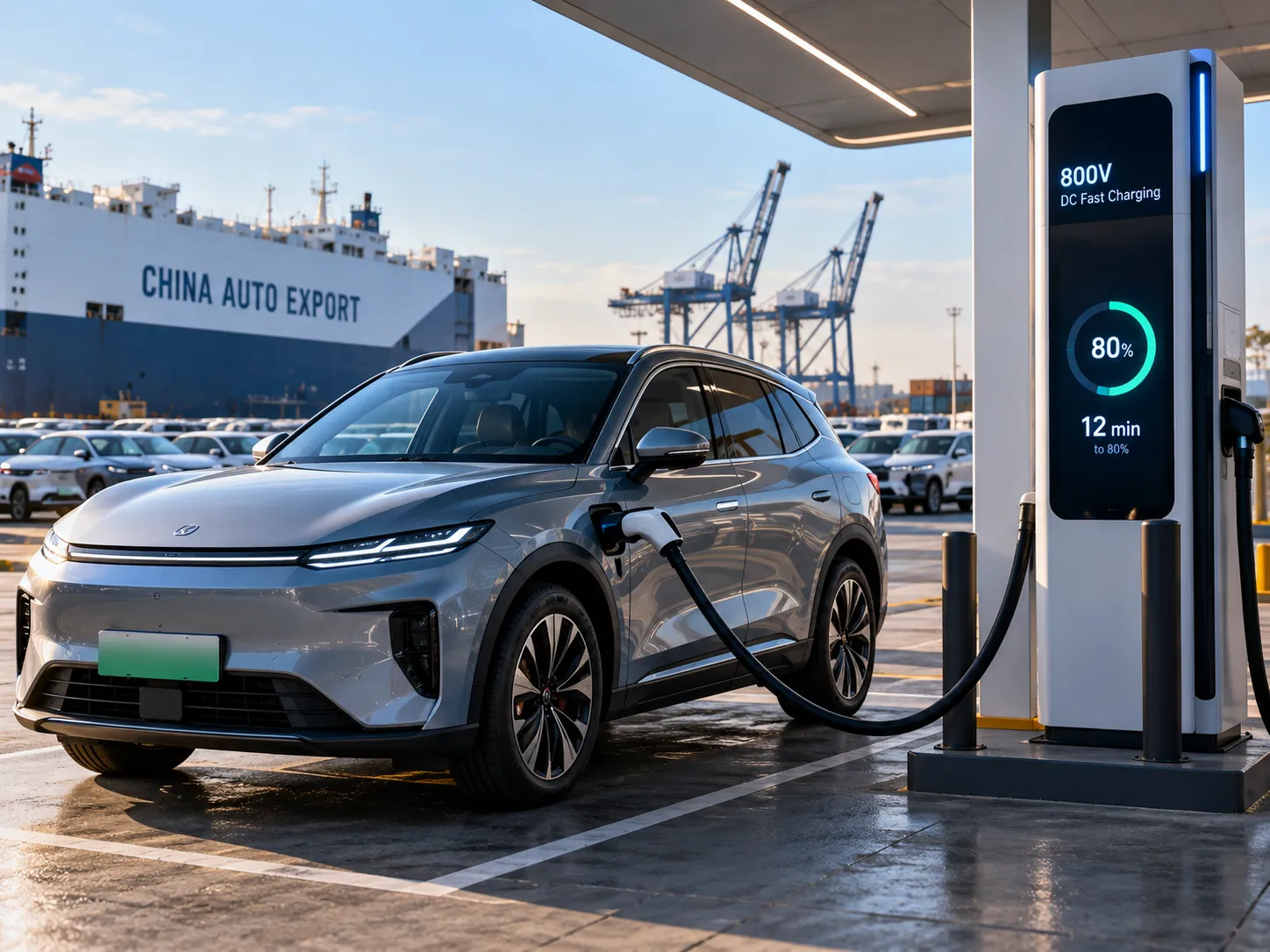
China's 800V platform now charges an EV to 80% in about 12 minutes, and BYD's megawatt flash charging tops 97% in nine. What once signalled a flagship now ships on a 118,800-yuan SUV. For fleet buyers, that shortens duty cycles and shifts total cost of ownership. Here's what the tech actually changes.
800V Is No Longer a Flagship Feature
For years, an 800-volt architecture was the tell that a car sat at the top of a brand's range. That marker is gone. In September 2026, the Lynk & Co 20 launched with an 800V platform across the entire line, 6C charging, and a limited-time entry price of 118,800 yuan — roughly US$16,600 before export costs. The car took 14,663 firm orders in its first hour.
That number matters less as a sales headline than as a signal of cost. Eight hundred volts used to be engineering reserved for premium sedans. Now it ships on a compact SUV with a 245 kW rear-drive motor, a 61.52 or 70 kWh blade-style lithium iron phosphate pack, and CLTC ranges of 545 to 630 km. Every trim also carries lidar and 28 sensing units as standard.
What this means in practice is that a fleet buyer no longer pays a "fast-charging premium" to get a vehicle that can turn around a shift on a short charge. The hardware cost of the high-voltage platform has been amortized across Chinese production volumes. A distributor in Santiago who used to spec only combustion compacts told us the pricing now lands in the same band he budgets for a mid-size ICE SUV. That parity is the real news.
What "Charging as Fast as Refueling" Actually Means
The phrase came from Lian Yubo, BYD's chief scientist, speaking at the 2026 World New Energy Vehicle Congress. He framed charging speed — not range, not motor output — as the last remaining barrier to deep electrification. His claim is specific: for a 130–150 kWh pack with 1,000 km of range, a megawatt flash charger takes the battery to 97% in nine minutes.
Two details in that claim are worth unpacking, because both trip up buyers who read only the headline.
First, why 97% and not 100%? BYD deliberately leaves headroom so the car can return energy during braking rather than waste it. The last three percent is not a defect; it is a control strategy. Second, the low-temperature figure. At minus 30°C, the same charge takes at most three extra minutes. That is a far bigger engineering claim than the headline number, and it is the one a cold-climate fleet should care about. Lead-acid-era fleets in northern Europe or Canada have watched range and charge speed collapse in winter for a decade. A charge curve that barely bends in the cold changes which routes a vehicle can hold.
There is a grid caveat buried in the same announcement. The 1,500 kW single-gun charger exists, but it is paired with on-site storage so the station does not demand the full burst from the local grid. BYD says it has built more than 10,000 flash-charging stations and plans 90,000 within two years. The storage buffer is the reason that math can work in places with weak distribution networks — and why a fleet operator should treat charger-and-storage as one procurement decision, not two.
The Fleet Economics: Why Charge Speed Beats Range
Range sells brochures. Charge speed keeps a fleet running. A vehicle that holds 630 km but takes 40 minutes to top up is less useful to a taxi operator or delivery fleet than one that holds 545 km and refills in 12 minutes across the 10–80% window.
Here's the thing most ROI calculators miss: duty cycles compound. A car that can do one extra trip per day because its turnaround shrinks from 45 minutes to 12 earns back its cost faster than any efficiency gain. One importer we worked with in Lagos runs a mixed fleet of airport shuttles. His planners do not ask about 0–100 km/h times. They ask how many pickups a driver can complete between two scheduled charges. That is the question 800V answers.
The resale side is quieter but just as real. As high-voltage architectures spread downmarket, a 400V vehicle bought today will look dated to the next owner in three years. Fleet buyers who resell at 24 or 36 months are already pricing that gap. The faster-charging vehicle depreciates less, not because it is faster in a straight line, but because the second buyer can see it surviving the next wave of battery chemistry.
That said, the infrastructure still leads or lags the vehicle depending on the market. A fleet spec'ing 800V vehicles into a country without 800V-capable chargers is buying capability it cannot use. The storage-buffered chargers BYD is exporting alongside the cars are part of the deal, not an afterthought. Procurement should treat the two as a pair.
From 800V to 1000V: What Changes for Durability
The industry is already moving past 800 volts toward 1,000-volt systems, and the shift is not just a bigger number on the label. Higher bus voltage means higher power density, faster-switching silicon carbide devices, and tighter integration of the motor, inverter and housing. That combination sharpens an old enemy: bearing electrical corrosion.
Stray currents and common-mode voltage can arc through a motor bearing, pitting the raceway and shortening life. The Chinese industry's answer has moved from bolting on a conductive ring toward what engineers call full-chain control — managing the voltage step, the high-frequency current path, the lubricant's electrical properties, and the bearing's surface roughness together. Research presented through 2026 shows a conductive ring can cut bearing voltage by about half, but its effectiveness shifts with rotor speed, so validation has to happen on a complete motor, not a part bench.
For a fleet buyer, this is a longevity and warranty question dressed as an engineering one. High-voltage platforms demand that lubricants act as electrical insulators and conductors at once, and that bearing surfaces tolerate the resulting micro-discharges. Get it wrong and the failure shows up at 100,000 km, not at the launch event. When you are pricing a 36-month fleet, that is exactly the window you are exposed to. Ask the exporter for the motor's bearing-voltage test data and its corrosion validation, not just the charging spec sheet.
A Procurement Checklist for 800V Fleets
Before signing, verify the things the brochure does not cover:
The actual charge curve, not the headline. "10–80% in 12 minutes" is a band. Ask for the curve at 0°C and 25°C, and at your fleet's typical state of charge.
Charger and storage as one line item. An 800V vehicle on a 400V-era charger delivers nothing. Confirm the charger's rated power, its grid draw, and whether storage is included.
Homologation, not just performance. Exporting to the EU or UK means the vehicle must meet UNECE Regulation No. 100 on electrical safety and the relevant charging standard under IEC 61851. Confirm the unit and its charger carry the certificates for your destination market.
Cold-climate derating. If your market freezes, ask for the charge-speed figure at minus 20°C or lower, in writing.
Warranty on the high-voltage loop. Battery, inverter and charging port should be covered separately from the general vehicle warranty. Read the exclusions.
A dealer in Bogotá who moved a batch of Chinese 800V SUVs into a ride-hailing fleet last year skipped the charger pairing and spent two months limping on public 400V stations. The vehicles were fine; the spec was incomplete. The fix cost less than the idle time did.
FAQ
How long does it actually take to charge an 800V EV?
The useful window is 10–80%, and on a 6C vehicle that runs about 12 minutes. BYD's megawatt flash charging pushes a large pack to 97% in nine minutes, with the last three percent held back deliberately for energy recovery. A full 0–100% charge always takes much longer, so fleet planners should schedule around the 10–80% band, not a full tank.
Is ultra-fast charging bad for the battery over time?
Frequent high-rate charging generates heat, which is why the second-generation blade cells in these vehicles are engineered around ion migration, heat dissipation and temperature control. The degradation risk is real but managed — and the resale argument cuts the other way, since a battery validated for megawatt charging tends to hold value better than one that is not.
Do 800V EVs cost more to buy?
They used to. The 118,800-yuan entry price on the Lynk & Co 20 shows the platform has reached mainstream pricing, roughly the band of a mid-size combustion SUV. The premium, if any, now sits in the charger infrastructure, not the sticker.
What charger do I need for 800V fast charging?
A high-power DC charger matched to the vehicle's voltage, ideally with on-site storage to soften the grid draw. Confirm the connector standard for your destination market — China's GB/T 20234.3 DC standard differs from CCS2 in Europe — and have the charger homologated alongside the vehicle.
Can I import Chinese 800V EVs for my fleet?
Yes, and this is where a china auto exporter with a homologation track record earns its margin. The vehicle, charger and certification bundle for your market is a single sourcing decision. If you are weighing a mixed 800V fleet and want a tailored landed-cost quote, the team behind this guide can help.
Sources
UNECE Regulation No. 100 — uniform provisions for the safety of electric power trains (battery electric vehicles), the electrical-safety baseline for most export markets.
IEC 61851 — international standard for electric vehicle conductive charging systems, covering the high-power DC charging these vehicles use.
GB/T 20234.3 — China's national standard for the DC charging connector, the interface fleet buyers must map onto their local standard.
CCCME 《出口商品技术指南》 — China Chamber of Commerce for Import and Export of Machinery and Electronic Products, export technical guidance for new-energy vehicles.
BYD disclosure at the 2026 World New Energy Vehicle Congress (Lian Yubo), as reported by Autohome and D1EV — source of the megawatt flash-charging and 90,000-station figures.
—
About Zacarmate
Zacarmate is a China-based auto exporter supplying overseas fleet buyers, wholesale dealers and channel distributors with new Chinese-brand vehicles — from 800V fast-charging EVs to commercial and passenger fleets. We handle factory allocation, export documentation, UNECE and destination-market homologation, and Ro-Ro or container logistics to major ports across Latin America, Africa, the Middle East and Southeast Asia. Low MOQ for trial orders, full pre-shipment inspection, and a dedicated after-sales line for parts and warranty claims.
Get Export Support — send your target market and annual volume, and we return a landed-cost quote with the charging infrastructure paired to the vehicles.
Zhongan TikTech (Anhui) Co., Ltd.
Zhongan TikTech (Anhui) Co., Ltd., a Conch Group SOE, exports quality new & used vehicles globally with 40+ years' foreign trade expertise.
 EN
EN
 fr
fr  es
es  ru
ru  pt
pt